Sep 17, 2026
Published in San Antonio Express News
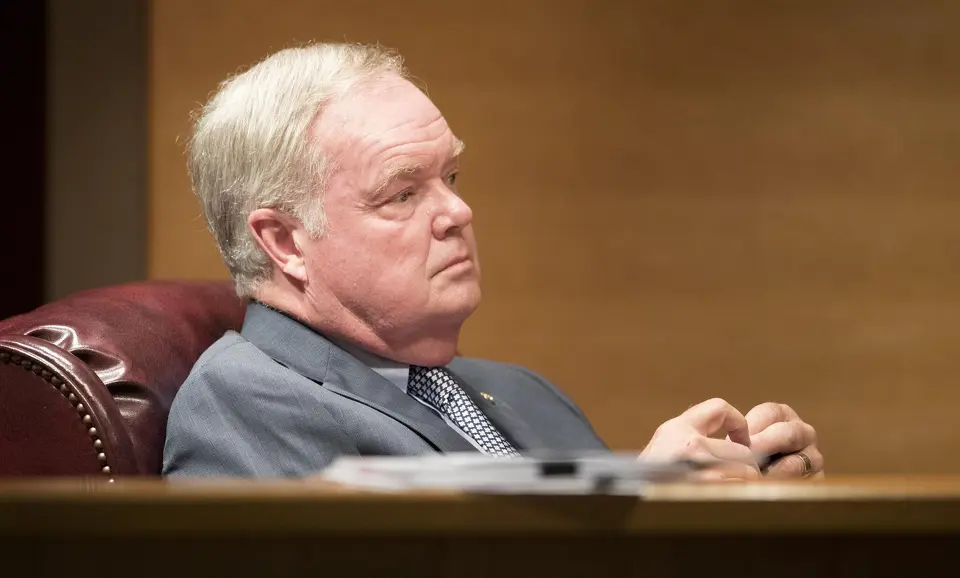
As bad actors in the oil and gas business offload more of their waste onto the communities the industry most depends on, the state’s lead oil regulator just took a major step to ban Texans from speaking their minds.
Last month the Railroad Commission of Texas — which oversees oil and gas, not railroads — ended guaranteed public comment at its monthly open meetings. Texans will now be heard only “at the discretion of the commissioners,” as Commissioner Wayne Christian put it. The commission did not take comment on that item, either. When one of us, Virginia, rose to point out that the commission had just “approved an agenda item on public participation without allowing public participation,” she was cut off.
Oil- and gas-producing communities have always borne a heavy burden from an industry that has brought Texas so much wealth — riches that often come at the cost of tainted water, poisoned air and blighted soil. These costs are rising. The average new Permian well now runs more than two miles sideways underground — and every added foot means more drill waste laced with arsenic and radium.
Each barrel of oil comes up with more toxic brine than the one before — three and a half barrels on average. Railroad Commissioner Jim Wright told the Senate in August that pushing more wastewater underground is like “trying to stuff 20 ounces of fluid in a 12 ounce can,” and that the pressure could set off “some major seismic event tomorrow.” The industry’s answer: put it aboveground, on cropland and into rivers. When the state’s environmental regulator asked Texans about that this year, virtually all of the comments objected.
This is the kind of public input that the Railroad Commission has made a habit of avoiding. Take flaring — the industry’s unpopular burning off of excess gas — which sickens communities downwind. The commission boasts that flaring is down — based on numbers the industry reports about itself. When the Legislature noticed in 2021 that Railroad Commission numbers didn’t match the state environmental regulator’s numbers, it ordered the commission to evaluate solutions. The commission wrote the plan, at public expense, and promised to share the findings.
But when a Texas scientist asked to see it this June, the commission went to the attorney general for permission to keep the plan a secret — and two days after the vote to end public comment, they got it. Commission Shift has published reports documenting the Railroad Commission’s failure to enforce limits on its flaring permits. Community members in South Texas have reported serious respiratory problems after flares were operated near their homes or workplaces.
Or look at wastewater. The agency will automatically approve a new injection well — which can threaten underground drinking water — inside a permitted area if its own staff don’t object within 20 days. Every such new injection well adds pressure — think of Wright’s 12-ounce can metaphor — and that pressure can push old, plugged wells back to life. One of us, Saul, recently mapped some 25,000 plugged Texas wells at critical risk of erupting with brine and gas, roughly 50 times the number previously reported. But the public has only 15 days to protest before this blanket area permit is approved, and a community’s first warning is often the rumble of 18-wheelers. And when a company violates its permit, potentially threatening groundwater, the Railroad Commission lets them settle in private. Neighbors learn of it, if ever, only after the commissioners sign off.
And then there is solid waste. When the Railroad Commission rewrote its drilling-waste rules for the first time in 40 years, it required drillers to register reserve pits — but not to notify the landowner, over the protests of oil field residents who came to Austin — a rule written after two years of closed-door meetings with industry and not one hearing in the oil field.
We may know why Christian proposed to shut the public out: when Texans see what the modern oil and gas business has become, they get angry. Ask the people of Paxton, in East Texas, who watched six of the commission’s own examiners, conclude that a proposed oil field waste dump would sit atop groundwater four feet down, 1,200 feet from the water supply that serves some 650 families, and recommend denial — only to have Christian and Wright approve it, over Craddick’s dissent. This is the same 2-1 split that just ended public comment.
None of this is hard to fix. Commissioners could put public comment back on every agenda tomorrow. They could start taking testimony by phone, the way the state’s environmental regulator does. They could allow comments on agenda items, not only at the end of the meeting. They could release the flaring plan. The Legislature should demand all of the above.
But there’s one thing that commissioners themselves need to grapple with. If Texans at meetings are angry, it’s not because they hate or misunderstand the oil business. It’s often they have been railroaded — systematically shut out of a process with life-and-death consequences for their land, water and the health of their families. Texans don’t sit down and shut up when these things are threatened. If we can be accused of one abuse, let it be freedom of speech.
Virginia Palacios has attended the Railroad Commission’s monthly open meetings for the past five years as executive director of Commission Shift, a nonprofit watchdog. Saul Elbein, a longtime energy journalist, runs Future Heist, a watchdog organization dedicated to broadcasting news about threats to the soil, air and water of Texas.